


Antminer Repair
Antminer Z15 Hashboard Repair Service
Antminer Z15 Hashboard Repair Service
Drop off available in Fort Lauderdale, FL (2141 NE 51st Ct).
✅ Turnaround: 4–5 business days
✅ Board-level diagnostics + repair
✅ Full load testing before return shipment
✅ Warranty: 30 days (extendable)
✅ Bulk discounts available
• Dead or missing hashboard
• Chain errors & unstable domains
• Power circuit faults (LDOs, shorts)
• Sensor & signal line failures
🔬 Component-level repair (ASIC chips, LDOs, power circuits, SMD parts)
🔥 Burn-in testing (under load)
🔍 Our repair process (step by step)
🛡 Warranty terms & conditions
💬 Contact us for volume pricing
Share


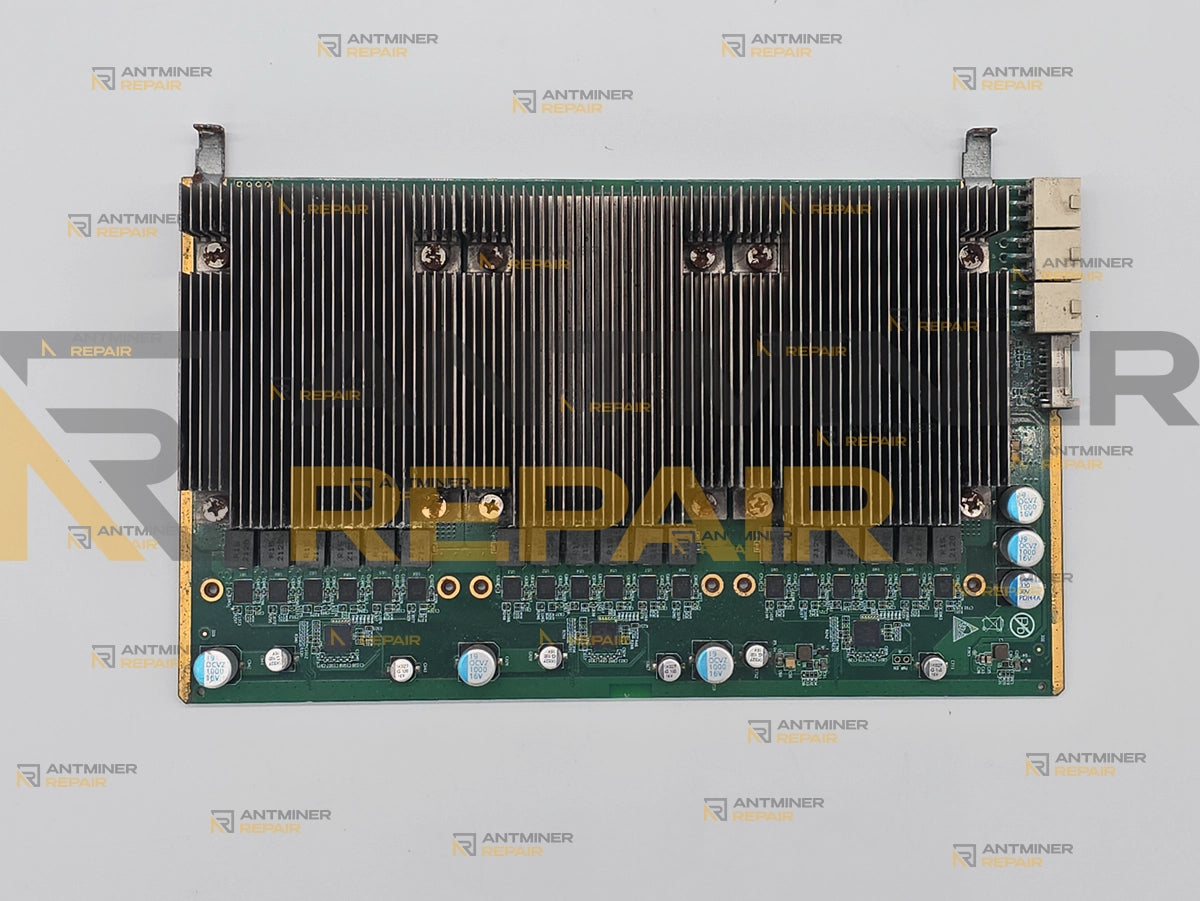
Antminer Z15 hashboard repair for boards with missing chains, temperature faults, power-domain issues, and BM1746AA chip failures. We perform board-level diagnostics, component-level repair, and real load validation to identify unstable rails, bad signal flow, and thermal-transfer problems specific to the Z15 platform.
Technical Diagnostics and Common Issues with Antminer Z15
Quick Symptom Checklist
- Chain missing or one board not detected in the miner dashboard
- Chain X has 0 ASIC / 0 ASIC detected on one hashboard
- Low hashrate, unstable hashrate, or repeated board drop under load
-
hashboard not foundor board powers off during initialization -
Read Temp Sensor Failed, 0°C reading,temp NG, or false over-temperature alarms -
ERROR_POWER_LOST, repeated restart behavior, or power-domain instability on the board
Model-Specific Patterns We See on Antminer Z15
- Single-domain failure has a large effect on Z15 because each hashboard has only three ASICs. One bad domain can remove roughly one-third of the board’s output immediately.
- Temperature-sensor or PIC-side faults can mimic overheating. The board may log high-temperature behavior even when the chips are not actually running hot.
- Burned or shorted BM1746AA ASICs often come with damage in nearby VRM or small SMD power components, especially after unstable power events.
- Old thermal interface material commonly causes throttling, hardware errors, and load-related hashrate drop on aging air-cooled Z15 units.
Hardware Notes
| Specification | Details |
|---|---|
| Total miner hashrate | 420 KSol/s stock |
| Approximate hashrate per hashboard | ~140 KSol/s nominal |
| ASIC chips per board | 3 |
| ASIC chip marking | BM1746 / BM1746AA |
| Board base | Standard PCB |
| Domain structure | 3 domains per board, effectively 1 chip per domain |
| Cooling type | Air-cooled |
| Algorithm | EquiHash |
| Architecture notes | Per-domain power management, 25 MHz crystal, temperature-sensor path, PIC controller logic, and high-current board power distribution |
Diagnostics Focus
- Power-domain validation first: core rail, auxiliary rails, and unstable domain bring-up on the three-domain Z15 board
- Signal-flow tracing through CLK / CO / BO / RST forward path and RI / RX return path to isolate the failing chip or broken communication section
Our Professional Repair Process
Gotchas
- Z15 boards do not tolerate sloppy heat well during chip work. Excessive dwell time can damage the PCB and create new intermittent faults.
- Power-management sections must be handled carefully during diagnostics and programming because repeated blind attempts can turn a repairable board into a donor board.
Typical Service Scenario
- Dust-loaded miner with reduced airflow, dried thermal interface, rising temperatures, and random board drop under load
- High-humidity or corrosive environment causing sensor-path instability, false temperature alarms, or intermittent startup faults
- Power event or PSU instability followed by burned ASIC area damage, rail faults, or a chain that disappears after boot
What Happens After Intake
After intake, the board goes through incoming inspection, board-level diagnostics, and component-level repair. We then clean the board, restore the thermal interface where required, and validate operation on professional fixtures such as STASIC / ASIC REPAIR. Final verification includes a minimum 1-hour live test inside a real miner under load. Extended testing is available as a separate service.
Diagnostics & Validation Equipment
We use dedicated ASIC repair fixtures for domain isolation, signal tracing, and fault confirmation, then complete final validation in a real Antminer Z15 chassis under working conditions. This helps catch unstable rails, marginal chip replacements, and temperature-related faults that do not always appear in a quick bench pass.
Contact our repair team today and get your miner back to full power.
Technical FAQ
Q: What if my Antminer Z15 shows 0 ASICs after cleaning and reinstalling the hashboard?
Q: What does Read Temp Sensor Failed mean on an Antminer Z15 hashboard after the miner starts normally?
Q: Why does my Antminer Z15 keep restarting when one hashboard drops out during startup?
Q: Can an Antminer Z15 hashboard with a burned BM1746AA chip still be repaired, or is the board dead?
Q: Why is my Antminer Z15 hashboard overheating and losing hashrate under load even though the fans are working?
Q: How is Antminer Z15 hashboard diagnostics different from repairing larger Antminer boards like S17 or S19?
Great work on my Z15 board. Only place I found that was able to repair this type of board. I will defenitely work with you again.
Great job..
If you come across any to sell let me know..
- Choosing a selection results in a full page refresh.
- Opens in a new window.
Have a repair question?
Ask anything about miner repair, diagnostics, shipping, or your next step.